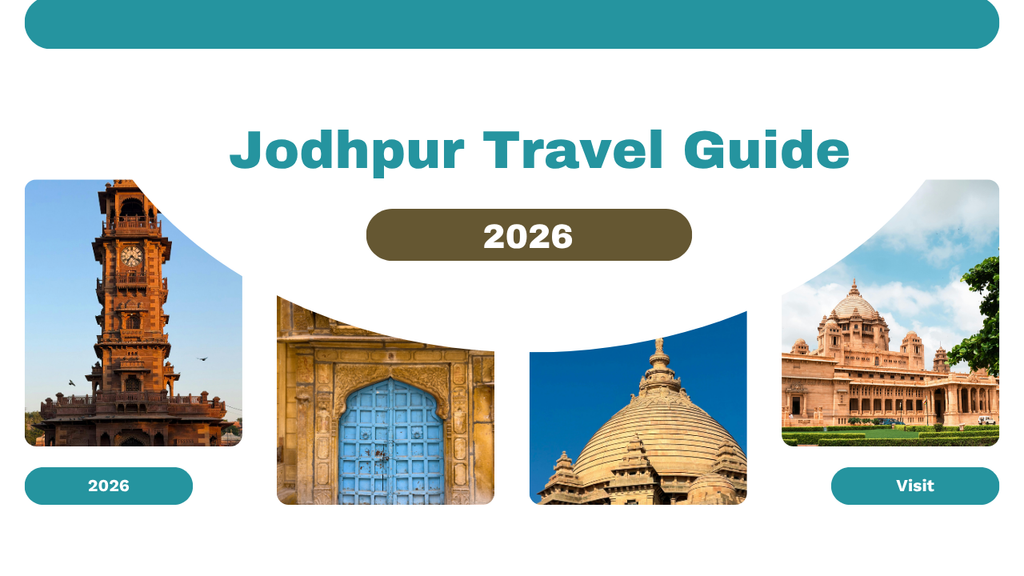
Jodhpur Travel Guide 2026: Forts, Blue City, Food & Things to Do
By Nikita Sharma•Oct 01, 2026•Travel Guide
Jodhpur is one of the most recognizable destinations in Rajasthan, known for its blue-painted houses, imposing Mehrangarh Fort, royal palaces, traditional markets and distinctive Rajasthani food. Often called the Blue City, Jodhpur offers a different experience from Jaipur and Udaipur, combining historic architecture with busy bazaars, narrow old-city streets and views across the surrounding landscape.
For travelers planning a Rajasthan holiday, Jodhpur can work as a standalone destination or as part of a longer route connecting Jaipur, Udaipur, Jaisalmer and other cities. The city has enough attractions for a short weekend-style visit, while travelers with more time can explore its food, markets, neighborhoods and heritage at a slower pace.
This Jodhpur travel guide covers the city’s major attractions, the Blue City, things to do, local food, shopping, transportation, the best time to visit and practical planning tips for 2026.
Quick Answer: Is Jodhpur Worth Visiting?
Jodhpur is worth considering if your Rajasthan trip includes forts, royal architecture, historic neighborhoods, local markets and traditional food. Mehrangarh Fort is the city’s major landmark, but the experience goes beyond the fort.
The old city around the Clock Tower and Sardar Market provides a glimpse into everyday Jodhpur, while the blue-painted neighborhoods create some of the city’s most recognizable views. Umaid Bhawan Palace represents another period of the city’s royal history, while places such as Jaswant Thada and Toorji Ka Jhalra add architectural variety.
Travelers who want a desert experience can also use Jodhpur as part of a route toward Jaisalmer.
Why Is Jodhpur Called the Blue City?
The Blue City name comes from the blue-painted houses found across parts of Jodhpur’s historic neighborhoods, particularly around the area beneath Mehrangarh Fort.
The color has historical and cultural associations, although the reasons for blue-painted houses are often explained in different ways. The blue neighborhoods have become one of the city’s defining visual characteristics, especially when viewed from elevated locations around Mehrangarh.
Walking through these neighborhoods is different from visiting a formal monument. You can see traditional homes, narrow streets, small shops and everyday local activity alongside historic architecture.
For photographers, the contrast between the blue houses and the sandstone walls of Mehrangarh Fort creates some of the most distinctive scenes in Rajasthan.
Mehrangarh Fort: The Landmark You Should Not Miss
Mehrangarh Fort is the centerpiece of any first-time Jodhpur visit.
Built on a rocky hill overlooking the city, the fort dominates the surrounding landscape. Its massive walls, gateways, courtyards and palace interiors reflect the history of the former Marwar region and the Rathore rulers associated with Jodhpur.
Inside the fort, visitors can explore decorated palace rooms and museum collections that provide context about royal life, weapons, textiles, art and historic objects.
The fort is large enough that it deserves several hours rather than being treated as a quick stop. Comfortable footwear is useful because the visit involves walking through different sections and courtyards.
The views from the fort are another important part of the experience. From above, the blue-painted neighborhoods spread across the city, making it easier to understand why Jodhpur became known as the Blue City.
Jaswant Thada: A Quieter Heritage Stop
Located close to Mehrangarh Fort, Jaswant Thada provides a quieter experience after the scale of the fort.
This white marble memorial is known for its detailed stonework, carved screens and peaceful surroundings. Its architecture contrasts strongly with the reddish sandstone appearance of Mehrangarh.
Because the two attractions are located close to each other, travelers can conveniently combine them during the same sightseeing session.
For visitors interested in architectural photography, Jaswant Thada is particularly appealing because the white marble, landscaped surroundings and hill views create a different visual character from the rest of the old city.
Umaid Bhawan Palace
Umaid Bhawan Palace represents another chapter of Jodhpur’s royal history.
Unlike the medieval character of Mehrangarh, the palace reflects a much more modern period of palace architecture. The property is expansive and visually impressive, with grand architectural details and landscaped surroundings.
Part of the property operates as a heritage hotel, while other sections are associated with a museum and the former royal family. Visitor access can vary by section, so it is sensible to check current arrangements before planning the visit.
For travelers who enjoy palaces, architecture and royal history, Umaid Bhawan provides an important contrast to Mehrangarh Fort.
Explore the Historic Blue City
One of the best things to do in Jodhpur is simply walk through the historic neighborhoods around Mehrangarh.
The Blue City experience does not depend on visiting one specific attraction. It comes from observing the old houses, small businesses, narrow streets and views of the fort from different parts of the neighborhood.
Morning and late afternoon can provide different atmospheres, while photographers may prefer exploring when the light creates stronger contrast between the blue buildings and sandstone architecture.
It is worth allowing some unplanned time here. A strict sightseeing schedule can make it easy to miss the small details that give the old city its character.
Clock Tower and Sardar Market
Clock Tower and Sardar Market are among the busiest areas of the old city and are useful for travelers who want to experience Jodhpur beyond its monuments.
The market has shops selling spices, textiles, handicrafts, traditional clothing, decorative products and other local goods. It is also a good area for trying local snacks and observing everyday commerce.
Shopping here requires some comparison. Prices and quality can vary between shops, particularly for handicrafts and textiles, so take your time before making larger purchases.
Even travelers who are not interested in shopping can enjoy the area for its atmosphere and historic surroundings.
Toorji Ka Jhalra and Jodhpur’s Stepwell Architecture
Toorji Ka Jhalra is a historic stepwell located in the old city.
Stepwells were an important part of traditional water-management systems across Rajasthan, and their architectural design reflects the practical as well as artistic role of water in historic settlements.
Toorji Ka Jhalra is smaller in scale than Jodhpur’s major forts and palaces, making it an easy addition to a city exploration route. The surrounding area also has cafés, shops and heritage spaces, allowing travelers to combine sightseeing with a short break.
It is a good example of why a Jodhpur itinerary should not focus only on large royal monuments.
Things to Do in Jodhpur Beyond Sightseeing
Jodhpur is best experienced by combining major attractions with everyday local experiences.
Walking through the old city is one option. The streets around Mehrangarh and the markets provide opportunities to see traditional architecture and local businesses while moving between attractions.
Food exploration is another important part of the experience. Rather than treating meals simply as breaks between monuments, travelers can use them to discover Rajasthani flavors.
Photography is also popular because Jodhpur offers a combination of sandstone forts, blue houses, market streets and hilltop viewpoints that is visually different from Jaipur or Udaipur.
Travelers who enjoy shopping can spend time exploring traditional textiles, handicrafts, spices and locally made products.
Food is an important part of the Jodhpur experience.
The city is known for snacks and dishes associated with Rajasthan, including mirchi vada, mawa kachori, dal baati churma and different preparations using local spices and ingredients.
Mirchi vada is particularly associated with Jodhpur’s snack culture, while mawa kachori offers a sweeter and richer alternative. Travelers should also try traditional Rajasthani meals if they want to experience the regional cuisine beyond individual snacks.
Jodhpur also has a growing café and restaurant scene, including rooftop restaurants where visitors can enjoy meals with views toward Mehrangarh Fort.
If you are traveling with children or people who are not accustomed to spicy food, balance traditional dishes with familiar options.
Shopping in Jodhpur
Jodhpur’s markets are useful for finding traditional products and souvenirs.
Textiles, handicrafts, spices, leather products, traditional clothing and decorative items are among the categories travelers commonly look for.
Sardar Market around the Clock Tower is one of the most recognizable shopping areas, while smaller shops throughout the old city can also offer locally produced items.
If you are buying expensive handicrafts, jewellery or textiles, compare several shops and ask questions about materials and workmanship before making a purchase.
Keeping a separate shopping budget is also useful because it prevents souvenirs from unexpectedly increasing the overall travel cost.
How Many Days Do You Need in Jodhpur?
The ideal number of days depends on how deeply you want to explore the city.
Two full days can cover the major attractions and provide a good first introduction. This works particularly well for travelers who are using Jodhpur as one stop within a larger Rajasthan itinerary.
Three days provide more flexibility for exploring the Blue City, spending additional time at markets, trying different restaurants and visiting attractions at a slower pace.
Travelers who have more time can also use Jodhpur as a base for exploring nearby areas, although the right choice depends on the rest of the Rajasthan route.
The important point is not to measure the quality of the trip by the number of attractions visited. Jodhpur’s old city, food and atmosphere deserve some unstructured time.
Best Time to Visit Jodhpur in 2026
The cooler months are generally more comfortable for exploring Jodhpur’s forts, markets and historic streets. October through March is a popular travel period for Rajasthan because outdoor sightseeing is generally easier than during the hottest part of the year.
Winter mornings and evenings can be cooler, so travelers should carry suitable layers, particularly if they plan to explore early or spend evenings outdoors.
Summer can bring intense daytime heat. Travelers visiting during this period may prefer early-morning sightseeing followed by an indoor break during the hottest hours.
The monsoon period can bring occasional rainfall and changes in the surrounding landscape, although travel conditions can vary from year to year.
Jodhpur is connected to other major Rajasthan destinations by road and rail, and it also has an airport serving domestic travel.
Train travel can be practical for travelers connecting Jodhpur with cities such as Jaipur and other parts of India. Road travel is useful when Jodhpur is included in a private Rajasthan circuit.
Your arrival method should be considered when deciding how many sightseeing hours you actually have. A late arrival should not be counted as a full sightseeing day.
For travelers using private transportation, Jodhpur can also work as a middle point between eastern and western Rajasthan destinations.
How to Get Around Jodhpur
The most suitable transportation depends on your itinerary and group size.
Auto-rickshaws can be useful for shorter journeys, while taxis and private vehicles provide greater convenience when visiting attractions spread across different parts of the city.
The historic center is often better explored on foot. Narrow streets and busy market areas can make vehicle movement less convenient, while walking allows you to explore smaller lanes and local shops.
Families and groups may find a private vehicle useful for a full sightseeing day, while solo travelers can combine local transport with walking.
Jodhpur as Part of a Rajasthan Itinerary
Jodhpur can be combined with several major Rajasthan destinations.
Jaipur, Jodhpur, Udaipur and Jaisalmer are often considered together when travelers build a broader Rajasthan route, but not every traveler needs to visit all four.
If you have limited time, choosing two or three cities can produce a more comfortable holiday than spending most of the trip traveling between destinations.
Jodhpur is particularly useful for travelers who want a combination of forts and historic city life. Jaisalmer adds the desert experience, Udaipur adds lakes and palaces, while Jaipur provides another broad collection of forts, markets and royal architecture.
Jodhpur can work well for both couples and families, although the ideal pace may be different.
Couples can combine heritage sightseeing with rooftop restaurants, photography walks, markets and cultural experiences. The Blue City and Mehrangarh Fort provide particularly distinctive settings for photography.
Families may prefer a slower itinerary with fewer major attractions per day. Mehrangarh Fort involves considerable walking, so breaks are useful, especially when traveling with young children or older family members.
A private vehicle can also make the trip more convenient for families who want to visit attractions across different parts of the city.
Practical Tips for Visiting Jodhpur
Comfortable shoes are important because many of Jodhpur’s attractions involve walking, steps and uneven surfaces.
Carry drinking water during sightseeing, particularly during warmer months. Starting outdoor sightseeing early can make a noticeable difference when temperatures are high.
Allow additional travel time around busy areas of the old city. A route that appears short on a map may take longer because of traffic and narrow streets.
Do not schedule every hour of your trip. Keeping some flexibility allows you to spend longer at attractions you enjoy or explore a market or neighborhood that catches your attention.
When booking accommodation, consider location as well as room price. A hotel closer to your main sightseeing areas may reduce daily transportation time.
How Jodhpur Compares With Other Rajasthan Cities
Every major Rajasthan destination offers a different travel experience.
Jaipur is known for its broad mix of forts, palaces, markets and historic attractions. Udaipur is strongly associated with lakes, palaces and scenic surroundings. Jaisalmer offers the Thar Desert, dunes and desert camps.
Jodhpur occupies a different position, combining one of Rajasthan’s most impressive hill forts with a distinctive blue-painted old city and a strong local market culture.
This makes it particularly useful for travelers who want to experience both major heritage architecture and everyday historic-city life during the same trip.
FAQs About Jodhpur Travel
What is Jodhpur famous for?
Jodhpur is famous for Mehrangarh Fort, its blue-painted historic neighborhoods, royal architecture, traditional markets and Rajasthani food. The city is commonly known as the Blue City.
How many days are enough for Jodhpur?
Two full days are enough to experience the city’s major attractions. Three days provide more time for markets, food, photography and slower exploration.
What are the must-visit places in Jodhpur?
Mehrangarh Fort, Jaswant Thada, Umaid Bhawan Palace, the Blue City, Clock Tower and Sardar Market are among the main attractions. Toorji Ka Jhalra is another worthwhile stop for travelers interested in historic architecture.
Is Jodhpur good for a family trip?
Yes. Families can enjoy Jodhpur’s forts, palaces, markets and food. A slower itinerary with regular breaks is more comfortable, particularly for young children and older travelers.
Is Jodhpur expensive to visit?
Jodhpur offers accommodation, food and transportation across different price ranges. Your overall cost depends mainly on hotel category, transportation, number of days, sightseeing and activities.
What food is Jodhpur famous for?
Jodhpur is known for regional snacks and Rajasthani dishes such as mirchi vada, mawa kachori and dal baati churma. The city also has many restaurants serving traditional and contemporary food.
Which cities can be combined with Jodhpur?
Jodhpur can be combined with Jaipur, Udaipur and Jaisalmer depending on the number of days available. The best combination depends on your route, travel preferences and transportation arrangements.
Is Jodhpur worth visiting for a short trip?
Yes. Jodhpur’s major attractions can be covered during a short visit, while additional days allow more time for local food, markets and neighborhood exploration.
Plan Your Jodhpur Trip Around the Experience You Want
Jodhpur is more than a destination for visiting one famous fort. Mehrangarh provides the city’s historic centerpiece, but the Blue City, old markets, local food, stepwells and royal architecture create the broader travel experience.
If you have only a couple of days, focus on the major attractions and organize them according to location. If you have more time, slow down and explore the neighborhoods, markets and food scene rather than continuously adding new monuments.
For travelers building a wider Rajasthan holiday, Jodhpur can provide a strong contrast to Jaipur, Udaipur and Jaisalmer. The best itinerary is ultimately the one that gives you enough time to experience the destinations rather than simply counting how many places you can visit.
Welcome Rajasthan Tours
Travel Rajasthan in the Season That Suits You
Our team understands local weather patterns, seasonal activities
and the best routes for every month. Let us help you create a
Rajasthan journey around your interests.